

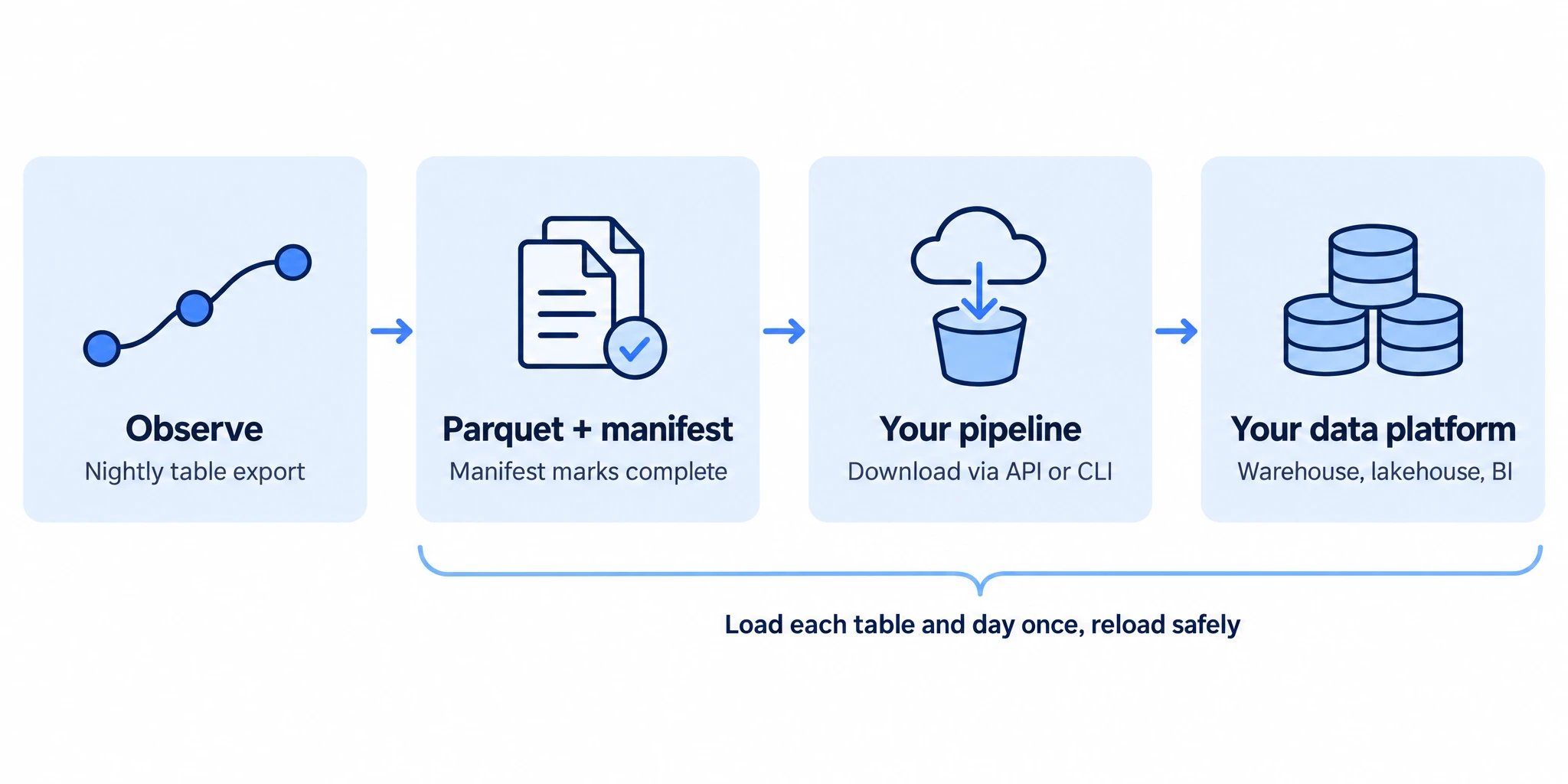
1. The loading pattern
1
List completed exports
Call
GET /observe/tableExports once a day after 01:00 project time. Only complete exports are listed.2
Skip what you already loaded
Keep a control table with table, export date and each file’s name, creation time and checksum. Load an export when its file inventory or metadata changes. Consume every listed part, including any sub-day parts.
3
Download the files
Request a download link per file and download the complete set into a fresh staging folder for that export version. Verify the files before replacing the previously loaded version, because a regenerated export can have fewer files.
4
Load a complete export version
Keep the source table, export date and version with the staged rows. Replace that export partition atomically after all parts load successfully. Reprocessing the same export then leaves the same result.
2. Platform overview
3. Custom exports
Enterprise scoping. If your platform requires direct delivery into storage you own, agree the delivery design and availability with Corbado before implementation.- Destination and access: storage location, region, ownership, permissions and encryption requirements.
- Contents and cadence: required tables or journey datasets, KPI definitions, delivery frequency and history.
- Corrections: how late events and reclassified journeys reach your platform, including replacement or versioning rules.
- Operations: batch completeness, retries, backfills, schema changes, retention and deletion handling.
4. Current data and history
Table exports are written once per day, so they suit history, reporting and joins with your own data. For questions about the last hours, such as an alert that fired this morning, query the Observe API or the CLI directly. Both read the current state of your project.Exports
Schedules, retention and download options.
Data model
Tables, keys and time columns.